
Neurogenic Diabetes Insipidus: The ‘Diabetes’ That’s Not About Sugar!
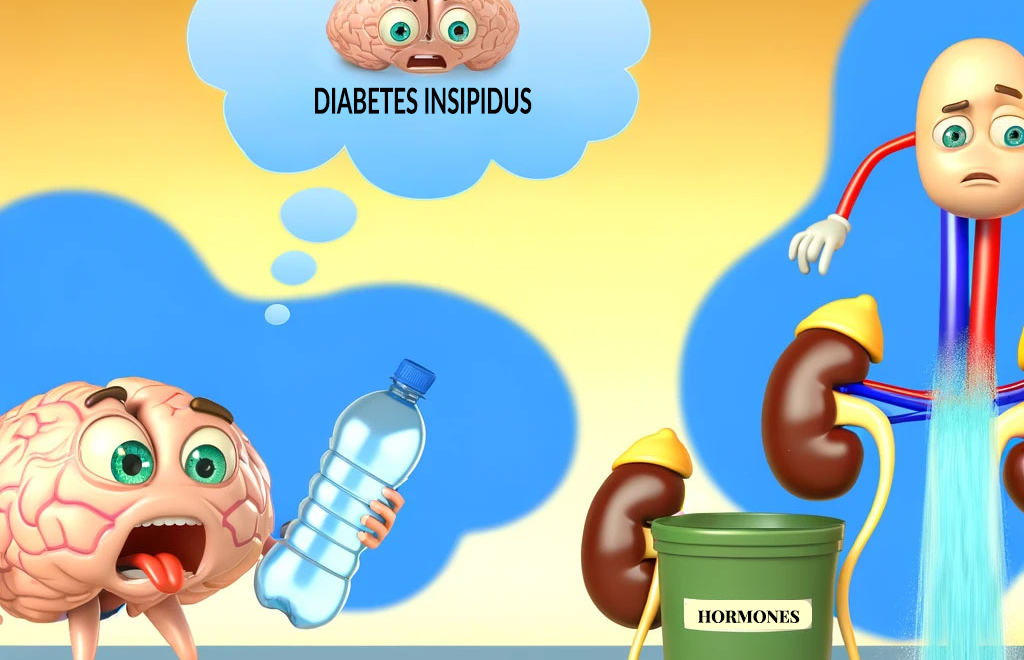
Alright, friends, gather around because today we’re diving into a condition that sounds like it involves sugar but really doesn’t: Neurogenic Diabetes Insipidus (NDI). Now, before you start thinking I’m about to launch into a lecture on blood sugar levels and insulin shots, let me stop you right there. Neurogenic Diabetes Insipidus is not the kind of diabetes you’re probably thinking of. In fact, it’s not about sugar at all! Let’s break it down in simple terms, with a dash of humor to keep things interesting.
What Exactly is Neurogenic Diabetes Insipidus?
First off, let’s clear up the confusion: Neurogenic Diabetes Insipidus has nothing to do with the diabetes you hear about on the daily. You know, the one that’s all about sugar, insulin, and your Aunt Sally’s strict no-cake diet. Diabetes Insipidus (DI) is a totally different ball game. It’s all about water, baby!
In the simplest terms, Neurogenic Diabetes Insipidus is a condition where your body can’t properly balance its fluids. It happens because the pituitary gland in your brain isn’t making enough of a hormone called vasopressin (also known as antidiuretic hormone or ADH). This hormone usually tells your kidneys to hold on to water, but without enough of it, your body just lets all the water flow out—literally. We’re talking excessive thirst and peeing like there’s no tomorrow.
Symptoms: What’s Going On?
Wondering what it feels like to have Neurogenic Diabetes Insipidus? Imagine feeling thirsty all the time, like you just ate an entire bag of salty pretzels with no drink in sight. And not just a little thirsty—like, “I could chug an ocean” thirsty. That’s because your body is losing water faster than a toddler at a splash pad. Here are the main symptoms:
- Excessive Thirst (Polydipsia): No matter how much you drink, you’re always thirsty. It’s like your thirst is never-ending.
- Frequent Urination (Polyuria): We’re not talking about just a few extra trips to the bathroom. With NDI, you’re peeing a lot—like 3 to 20 quarts of urine a day. For comparison, most people pee about 1 to 2 quarts a day. So, yeah, that’s a lot of bathroom time.
- Dehydration: Even though you’re drinking tons of water, your body’s not holding onto it, leading to dehydration. Symptoms include dry skin, dizziness, and fatigue.
How Do You Get Neurogenic Diabetes Insipidus?
Neurogenic DI is usually caused by damage to the pituitary gland or hypothalamus (the area of your brain that produces ADH). This damage can happen due to a head injury, surgery, infection, or even some diseases like meningitis or encephalitis. In some rare cases, it’s genetic. Basically, if your brain decides to take a little detour from its regular hormone production schedule, you could end up with NDI.
How Common is Neurogenic Diabetes Insipidus?
NDI isn’t exactly the most common condition out there. In fact, it’s pretty rare. It affects about 1 in 25,000 people. So, if you have it, you’re kind of in an exclusive club—like a secret society, but with way more bathroom breaks and water bottles.
Is There a Cure? What’s the Treatment?
Here’s the kicker: there’s no cure for Neurogenic Diabetes Insipidus. But don’t panic! The condition can be managed with medication and lifestyle changes. The main treatment is a synthetic form of vasopressin called desmopressin. This medication can be taken as a nasal spray, pill, or injection and helps your kidneys hold onto water, reducing your need to chug gallons of water and your trips to the bathroom.
- Desmopressin: Think of it as giving your body a little boost of the hormone it’s missing. It’s not a cure, but it’s pretty darn close to one in terms of symptom management.
- Adjusting Fluid Intake: You’ll also need to drink enough to stay hydrated but not so much that you overload your system. It’s a bit of a balancing act, but with a good doctor and some trial and error, you’ll find the sweet spot.
Conclusion:
So, there you have it! Neurogenic Diabetes Insipidus—a condition with a fancy name that’s all about water, not sugar. While it might sound a bit scary, the good news is that with the right treatment and some adjustments, you can manage the symptoms and live a pretty normal life. Just maybe stock up on some extra water bottles and make sure you always know where the nearest bathroom is. And remember, just because it has “diabetes” in the name doesn’t mean it’s what you think. It’s its own watery adventure!